
At a high level, a mission control center serves as the central hub for monitoring, commanding, and coordinating missions, whether they take place in space, the air, or on the ground. MCCs provide capabilities for planning missions, training personnel, generating critical products needed to execute operations, and offering real-time support.
Within an MCC, you typically find a skilled team of specialists, including engineers, scientists, and operators. They handle time-sensitive roles, watching over instrumentation, tracking data on system health and status, sending commands, responding to anomalies, and more. MCCs require advanced communication and data networks to connect with in-field assets and personnel.
Let’s explore some prominent examples of facilities that function as mission control centers:
When we think of NASA and space exploration, mission control often comes to mind. Facilities like NASA’s Christopher C. Kraft, Jr. Mission Control Center at Johnson Space Center in Houston handles human space flight. This famous MCC oversaw historic NASA missions dating back to the Gemini program, Apollo flights to the Moon, Space Shuttle program, and now, the International Space Station.
Teams in mission control monitor spacecraft from launch to landing or mission end. They keep constant tabs on astronaut health and safety while coordinating operational activities occurring onboard the spacecraft or outside during spacewalks. Controllers continually track spacecraft system status, position, and telemetry data. If issues arise, they methodically respond, deploying established procedures while collaborating with crews and other support teams to develop solutions.
Another prominent example involves centers controlling constellations of satellites, like communication spacecraft networks. In these domains, robust MCC capabilities are required to effectively monitor and manage satellites throughout orbits that can last 15 years or longer.
From checking telemetry on the health and status of birds to tracking anomalies, mission control helps keep satellites operating nominally. They send radio signals to satellites via a global network of ground stations to issue commands, receive data, and reposition spacecraft when required. If satellites encounter problems that the control team cannot resolve remotely, it can greatly complicate recovery efforts. That’s why highly skilled engineers staff MCCs.
Ever since supporting NASA’s boldest early space missions, mission control centers have remained integral to human spaceflight. Today, space agencies like NASA, ESA, Roscosmos, JAXA, and more operate advanced MCCs to:
MCCs also play pivotal roles managing satellite networks, communications spacecraft, deep space missions, and suborbital flights.
With the rise of private space companies like SpaceX, Blue Origin, Virgin Galactic, and Axiom Space, a growing number of commercial operators now have their own dedicated MCC facilities too.
These commercial MCCs offer many of the same capabilities as government centers supporting crewed launches, space tourism flights, private space stations, and more.
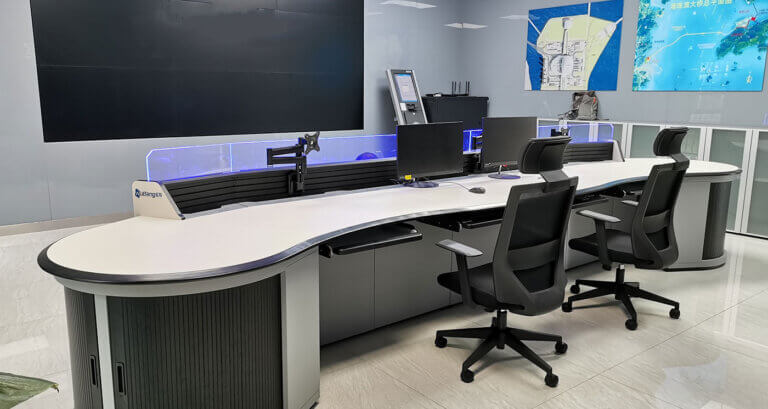
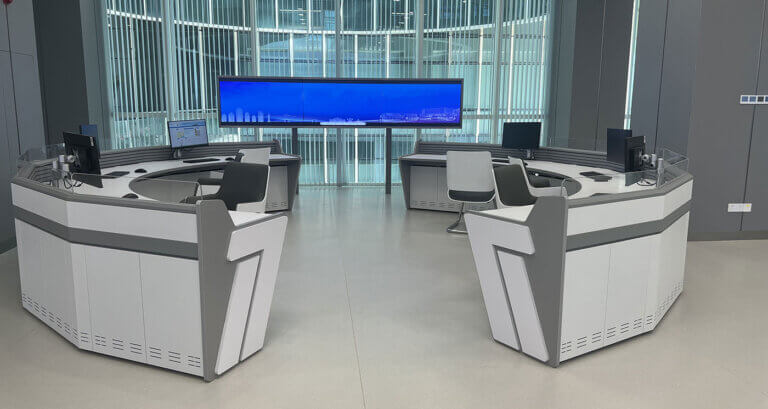
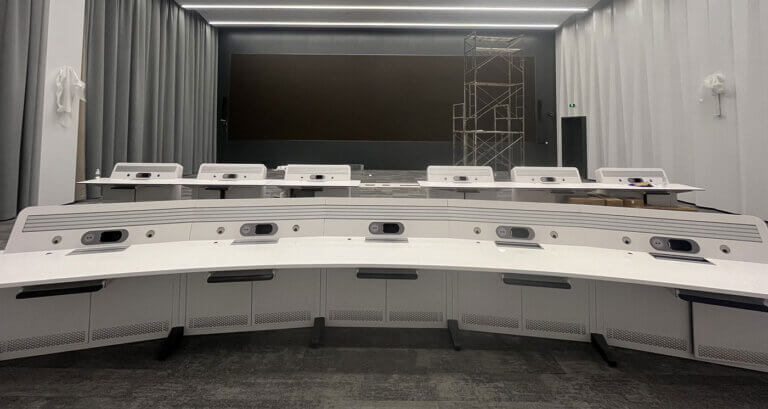
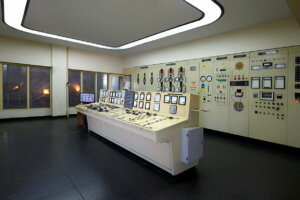
Now that you understand the function of an MCC, what does one look like? While formats vary across different MCCs, many share common layout characteristics, specialized equipment, and data capabilities.
Often, mission control centers utilize a tiered room, with multiple levels of seating wrapping around central supervisor consoles and large displays, called “big boards.” Big boards showcase key telemetry data streams, video feeds from the spacecraft, and real-time tracking of parameters. This setup allows the overall operations lead to scan critical screens and coordinate the broader team during crucial operations. Flight directors who manage all controllers working a shift usually sit at control room consoles below big boards too.
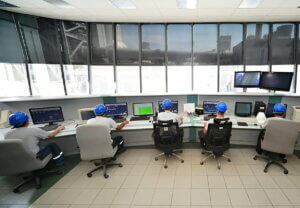
Around the outside of the room, you see rows of computer workstations packed with screens for engineers and other controllers who monitor individual systems on a spacecraft or for supporting functions like communication or data analysis. They watch telemetry, checking for indications of issues.
Machine learning algorithms can correlate data to identify anomalies. If they detect something, these engineers report it to the main flight director and collaborate to investigate causes and solutions. Together, the people, computers, and data in a mission control facility bring end-to-end management of incredibly intricate systems in stressful and high-stakes operational environments.
After learning about what mission control centers do and how they’re laid out, you can understand why MCCs offer such vital capabilities for managing sophisticated operations. Here are some of the key reasons these facilities are essential for overseeing missions:
MCCs give decision-makers, engineers, and key support staff a central location to monitor operations, check data, and communicate. Gathering together subject matter experts into a networked facility enables enhanced coordination and faster response times. It can facilitate creative solutions as controllers tackle issues from multiple angles.
From computing systems ingesting and displaying several data types to information security measures and communication links, MCCs contain specialized infrastructure tailored for overseeing systems and assets spread across vast distances. Teams rely on this infrastructure to safely execute intricate operations based on monitoring conditions in real time.
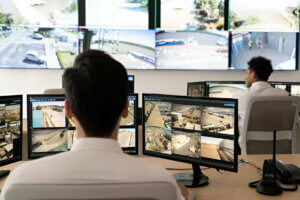
Another way MCCs empower smooth operations is through immersive data science capabilities. Telemetry measurements, video streams, positioning plots, and imagery get routed to screens all around MCCs. Controllers constantly validate expected performance and rapidly respond to discrepancies. Data analytics and visualizations in MCCs become indispensable for managing missions.
The most vital element within any mission control facility is the collection of brilliant individuals who apply their operational skills as a coordinated team. Around the clock, these committed controllers apply immense discipline and expertise to keep missions advancing and respond to dangerous contingencies. Their sharp skills avert disasters when seconds count. Talent drives the capabilities MCCs offer.
Now that you know all about the critical services mission control provides from their specialized centers, you can understand why “Houston” occupies such a revered place in space flight lore. MCCs enable success for all types of sophisticated operations on Earth and above by leveraging state-of-the-art facilities that link data, infrastructure, and most importantly, exceptional teams.
To help concrete examples of facilities that function as mission control solidify your understanding of what MCCs do and why they matter so much, let’s explore some notable real-world instances:
The most famous mission control center lies at NASA Johnson Space Center in Houston, Texas. Officially called the Christopher C. Kraft, Jr. Mission Control Center, this facility has coordinated NASA’s human space program since Gemini missions in 1965. It oversaw Apollo flights to the Moon, Space Shuttle program launches and landings, and now manages continuous operations aboard the International Space Station.
This MCC contains giant screens, rows of operations consoles, communications infrastructure, meeting rooms, and more. NASA added a modern expansion to enable managing longer missions with larger crews aboard the space station. Hundreds of personnel actively support ISS missions from JSC’s MCC. Teams of flight directors, engineers, scientists, technicians, instructors, and support groups all leverage these capabilities to keep astronauts safe and help them achieve mission objectives.
While human spaceflight gets controlled from Houston, automated interplanetary science missions get commanded from the Jet Propulsion Laboratory in Pasadena, California. Inside this MCC, orbiting satellites like the Mars rovers or Cassini at Saturn get monitored and controlled.
Given the immense distances involved, the speed of light means it takes over 30 minutes for radio signals (and data) to travel one way between JPL’s antennas to something like the Curiosity rover on Mars. That means MCC controllers cannot directly “drive” rovers in real time. Instead, they send sequences of commands that vehicles execute autonomously. JPL’s MCC became world famous as the operations hub for these amazing missions of discovery across our solar system.
The MCC at SpaceX headquarters in Hawthorne, California manages different operations than NASA or JPL. This mission control coordinates the launch and landing of SpaceX rockets and spacecraft. So rather than directly controlling what astronauts or satellites do, SpaceX mission control oversees launch vehicle health and performance from liftoff through booster landings and spacecraft deployments.
Once spacecraft separate from the rocket, SpaceX hands over monitoring to partner MCCs at NASA or companies who own the satellites. SpaceX does use its MCC to track the first demonstration flights of new vehicles like Crew Dragon or Starship. The company streams live video from MCC during major missions, viewable via YouTube and other outlets. SpaceX MCC leverages critical visualizations, data tools, in-house experts, and more to enable their fleet of advanced rockets.
While maybe not immediately coming to mind as a “mission control” center, 911 dispatch offices absolutely function as critical MCCs. At these emergency management coordination hubs, call takers answer distressed calls then relay information to dispatchers who communicate with police, medical services, or fire departments to get responders to the scene ASAP.
Dispatchers coordinate response across cities and regions from network-connected facilities. They access databases listing resources available from local agencies in real time. Visualization dashboards and dedicated communication channels enable dispatch MCCs to orchestrate life-saving aid across counties and even state lines as the emergency situation evolves. 911 dispatch qualifies as a vital mission control function.
Whether directing launches to orbit, troubleshooting issues aboard the International Space Station, coordinating disaster response, or otherwise managing sophisticated operations, mission control centers offer utterly essential, specialized capabilities.
These networked facilities full of monitors and control rooms give experts data-fueled visualizations to streamline directing intricate missions or dealing with contingencies in real time before situations escalate out of control.
The next time you hear NASA celebrate a team of “steely-eyed missile men and women” in mission control, remember everything you’ve learned about why their contributions working in those high-tech facilities proves so significant for success.
MCCs leverage both cutting-edge technology andexceptional talent to expand the boundaries of human achievement!

 English
  Russian
  French
  Italian
  German
  Japanese
  Korean
  Turkish
  Chinese
  Spanish
  Dutch
Dutch