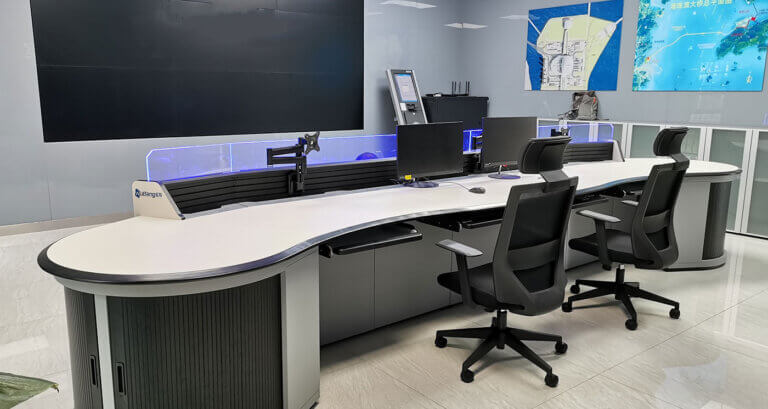
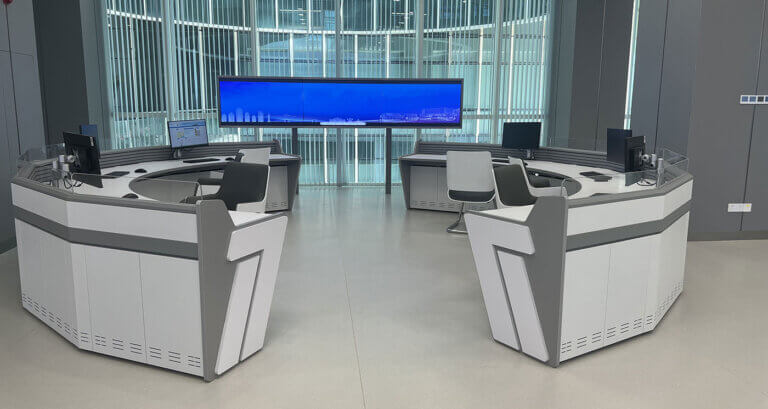
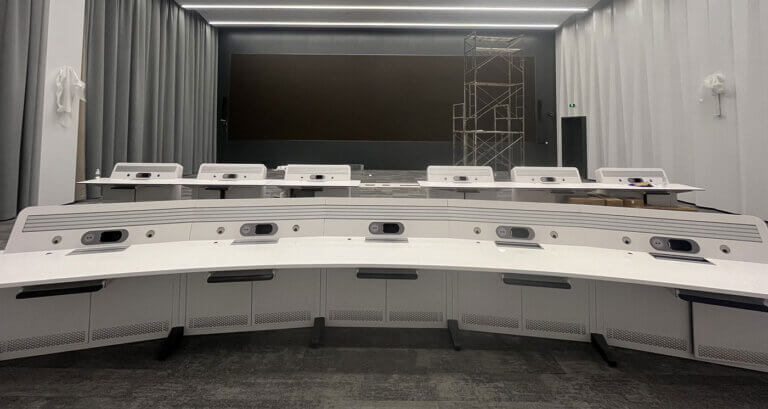

A military control room, sometimes called a command center, is a central location where military commanders manage real-time operations.
Inside these specialized facilities, officers oversee critical missions like:
The control room team gathers intelligence from various sources, processes the data, and analyzes threats. They identify opportunities to gain strategic advantages.
Commanders analyze the integrated information and make decisions to execute the mission. Directions get dispatched to subordinate units.
Sophisticated communications equipment facilitates coordination within military branches. It also enables collaboration across units and with superior officers.
Control rooms need to operate 24/7 so missions can be directed on a moment’s notice. Facilities are equipped with advanced computers, sensors, satellites downlinks, and surveillance systems.
As technology progresses, mobile command centers are becoming vital strategic assets.
Military control rooms bring together data, decision makers, specialized personnel, and cutting-edge gear to enable mission success.
While layouts vary, these nerve centers contain similar core components:
The command and control framework is the backbone that enables military leaders to direct strategic operations.
This architecture integrates systems that gather information, identify opportunities, make decisions, communicate directives, and manage resources.
Data inputs may include:
As information gets processed and examined, the team generates an integrated view of the scenario.
Leaders analyze the intelligence and make choices to accomplish objectives. Instructions go out across communication channels to mobilize forces.
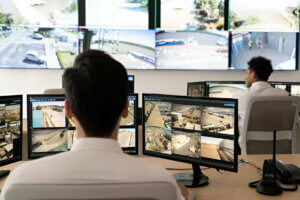
Large-scale video walls vividly showcase integrated data so the team can visually monitor activities.
Display walls seamlessly stitch together multiple screens to create expansive canvases exceeding 100 feet wide. Curved video walls with ultra-narrow mullions enhance the immersive experience.
Individual workstations have flat panels or cubes with rear-projection screens. Alert systems with warning lights indicate when critical notifications arrive.
The ability to rapidly share information can determine the outcome of an engagement.
Control rooms have an intercom matrix with dedicated lines to connect personnel stationed around the world. Video teleconferencing enables commanders to collaborate face-to-face.
Special consoles allow encrypted communications across military channels. Some systems have authentication protocols to validate identities before transmitting intelligence.
Radio networks have emergency frequencies. Telephone lines reach decision makers stationed locally and globally.
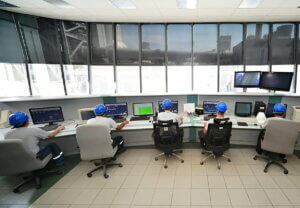
Operators spend long hours stationed at control room consoles while managing high-stakes operations.
Ergonomic consoles promote productivity and accuracy by enabling excellent working posture. Chairs have adjustable arms, heights, depths, and angles.
Desktops have sit-stand versatility to alternate between sitting and standing. Concave shapes and lowered sections improve line-of-sight.
Task lighting, cable routing, accessory mounts, and storage customize each station. Durable construction made in the USA accommodates round-the-clock demands.
Military control room crews tirelessly work in shifts to oversee global operations that protect national interests. Their responsibilities span intelligence, planning, execution, and monitoring progress.
Here’s a high-level view of how these covert bases support critical missions:
The first phase involves accumulating intelligence from assets across air, land, sea, space, and cyberspace.
Ground units send location pings and status updates. Drones capture detailed footage. Satellites stream reconnaissance images.
Maritime sensors detect threats. AI assessments analyze vulnerabilities. Weather forecasts predict environmental conditions.
As data funnels into the control room, the integrated display reveals the context for informed decisions.
Leaders examine the scenario and weigh options to accomplish strategic goals like capturing a target, escorting a convoy, or securing a stronghold.
They simulate different approaches by manipulating variables in computer models. The team identifies pros and cons for tactics based on timing, available resources, and probability of success.
Detailed schemes get drafted indicating positioning of forces, timing of actions, and backup plans. Orders prepare for mobilization upon final clearance.
Once a mission launches, all eyes turn to video walls streaming intelligence feeds from around the globe.
Personnel keep an ear tuned to communication channels while visually tracking the sequence of events as they unfold. Data flows in from central command centers down to boots on the ground.
If a radio goes silent or aDot blinks out, the team jumps to address potential threats. They notify the chain of command while redirecting assets to recon the situation
Minute by minute, the control room acts as the central nervous system directing precision military maneuvers according to strategic priorities.
While military control rooms share common functionality, their configuration and capabilities specialize to align with usage goals.
Here are a few examples of command centers with customized layouts:
Protecting a nation from airborne attacks requires detecting threats across vast skies in real-time.
Air defense control rooms have radar screens showing aircraft positions plus capabilities to assess new information instantly. Their map overlays identify restricted areas.
These nerve centers coordinate interceptions by guiding flight squads to investigate targets. If hostile intention gets confirmed, they command take-down measures.
Cyberattacks pose severe threats by shutting down infrastructure and stealing state secrets. Special IT teams monitor networks, thwart hackers, and mitigate breaches.
Cybersecurity operations centers contain rows of workstations packed with computing horsepower. Wall monitors track global hacking activity.
Teams evaluate vulnerabilities, strengthen defenses, remove malware, and gather forensic evidence on attackers. Machine learning systems detect anomalies and filter threats.
When disaster strikes, emergency operations centers mobilize assets for rescue missions, assess needs of affected communities, and coordinate delivery of vital supplies.
These dual-use facilities contain conference spaces for planning plus control rooms to direct urgent responses. They have contingency equipment for backup communications if infrastructure gets compromised.
Teams inside rapidly share updates to coordinate ambulances, road clearing, shelter provisions, and relief efforts across municipalities and first responders.
Guiding supersonic fighter jets to strike remote targets requires split-second coordination between ground control, aerial tankers, and combat pilots.
Fighter jet command centers contain aviation charts, terrain maps, and weather graphics. Forward air controllers use radio communication to guide precise missile strikes.
Radar screens track aircraft locations against ground targets. Data links stream video from plane-mounted cameras to assess damage after strafing runs.
Intercontinental ballistic missiles can deliver warheads across thousands of miles in under 30 minutes. Launch facilities are fortified and dispersed across remote areas that can survive initial strikes.
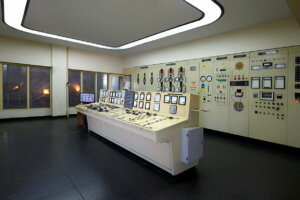
While missile silos house weapons awaiting directives, underground bunkers contain fire control centers. These sealed concrete cysts would direct retaliation sequences to designated targets.
Controls inside these confined spaces connect to public warning systems and communication channels with senior officials. Redundant power systems sustain function if surface grids get disrupted.
Engineering specialized environments for military operations requires in-depth expertise in data systems architecture, display technology, ergonomic design, and workspace configuration.
Here are top considerations when constructing these sensitive facilities:
Military control rooms rely on colossal data processing power to rapidly integrate and analyze real-time intelligence from networks spanning the globe.
Outfitting server and equipment rooms requires precision engineering to accommodate dense computing hardware with extensive cooling, ventilation, fire suppression, and backup systems.
Layouts allow neat cable routing across racks while meeting security protocols. Raised floors enableunderfloor air distribution. Monitoring systems ensure uptime exceeds 99.99%.
Facilities and control rooms handling classified data require specialized construction to provide sound attenuation plus signal isolation.
Floors, walls, and ceilings get built with layered materials that block electronic eavesdropping. Windows have radio frequency shielding films.
Entryways have mantraps to prevent unauthorized access. Faraday cages protect monitors and mobile devices. Security protocols restrict IT and building gear to approved countries of origin.
Operators occupy workstations for long stretches directing intense missions. Concentration andexecution rely on furniture and equipment that’s comfortable, adjustable, and rugged.
Ergonomic chairs have customized support for individual body types. Lighting accommodates varied tasks without glare. Storage keeps essential items handy while preserving clear lines of sight.
Durable construction made in the USA stands up to unrelenting demands. Consistent aesthetics promote focus across the console array.
As the central facilitator of battlefield awareness, joint coordination, operational planning, and mission command, the military control room is often described as a commander’s “eyes” and “nerve center”. The expansive capabilities these high-tech facilities enable will only grow more vital for military success as technology advances through 2024 and beyond. By bringing together skilled teams leveraging real-time data systems and analytical tools, control rooms empower commanders to effectively lead 21st century military operations.

 English
  Russian
  French
  Italian
  German
  Japanese
  Korean
  Turkish
  Chinese
  Spanish
  Dutch
Dutch